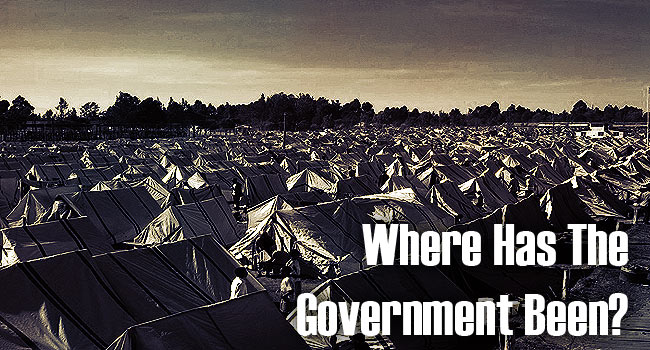
It is said ...'justice delayed is justice denied'...It's now more than four years after the General Elections in 2007 and the country is about to go to for the next elections, yet we still have many Internally Displaced Persons (IDPs) who are homeless with no source of income, following the post-election violence.
The Government has been making promises to resettle them all, however it clearly is still a work in progress. The IDPs are now crying out to be treated equally as the others and be resettled as well as compensated.
It is the responsibility of the Government to ensure that its people are living in conditions that are bearable and have access to basic meals. Kenya still has a number of people living in deplorable tents in the camps they occupied, and even lacking a basic meal to sustain them. Article 43 of the Constitution states that, every person has the right:
To accessible and adequate housing, and to reasonable standards of sanitation
To be free from hunger, and to have adequate food of acceptable quality
The Government may have offered compensation and the necessary requirements to some of them but there is need for it to be spread out evenly. The IDPs claim that the government's focus has mainly been in the Rift Valley leaving out those in other areas.
They have solid grounds for their protest considering Article 27 (1) of the Constitution which states, 'every person is equal before the law and has the right to equal protection and equal benefit of the law.' The latest group to be resettled is IDPs from Gilgil's 'Ebenezer Camp'. 80 families have been moved to Laikipia and Miti Mingi areas.
This demonstration came after the ICC verdict which saw four of the Ocampo six being confirmed for trial. The Government reacted to their confirmation in less than 48 hours and yet it has taken them more than four years to respond to those who were seriously affected by the violence. The fact that the confirmed are a part of the government does not necessarily mean that they get special treatment. If anything the government should attend to the IDP's first.
In a strange turn of events, the government is now set to spend over Sh3.2 billion to restart 5,000 post-election violence cases against those suspected to have played a role in the post election violence which have been lying dormant at the office of the Director of Public Prosecution (DPP) for the last four years. The timing is worrying since it's like the government was waiting for the ICC ruling for them to act.
It is the view of many that this move may turn out to be dangerous considering the current politically heated atmosphere. The fact that Kenyans have not totally healed may not work well with the re-opening of wounds suffered during the chaos.
The government may be trying to prove that its judicial system is good enough but it is the fear of many that it may be selective when it comes to convicting those in power. This is in consideration of the delayed action against the post-election violence suspects hence the preference of ICC to handle the cases.
The Electoral Commission of Kenya (ECK), now a defunct commission, was disbanded by the 10th Parliament in 2008 and replaced with the Interim Independent Electoral Commission of Kenya (IIEC).
The old constitution provided for the ECK consisting of a chairman and a maximum of 21 members appointed by the president. Its core duties were defined by the constitution as:
The registration of voters and the maintenance and revision of the register of voters
Directing and supervising the Presidential, National Assembly and local government elections
Promoting free and fair elections
Promoting voter education throughout Kenya
The Electoral Commission of Kenya had been bestowed with the main function of supervising and overseeing the whole electoral process to ensure it was effective and efficient.
Samuel Kivuitu was the Chairman of the Commission at the time of its disbandment. He was reappointed to his post by the Kenyan President Mwai Kibaki ahead of the 2007 general election, having already been in charge during Kenya's general elections in 1997, 2002 as well as a constitutional referendum in 2005. Mr. Kivuitu had initially been appointed to the post by former president Daniel Arap Moi, replacing Mr. Zacchaeus Chesoni, who was the head of the Electoral commission during Kenya's 1992 general election.
Civil unrest in the aftermath of Kenya's 2007 presidential elections and the election anomalies reported as a result prompted the government of Kenya to completely overhaul its system of managing elections.
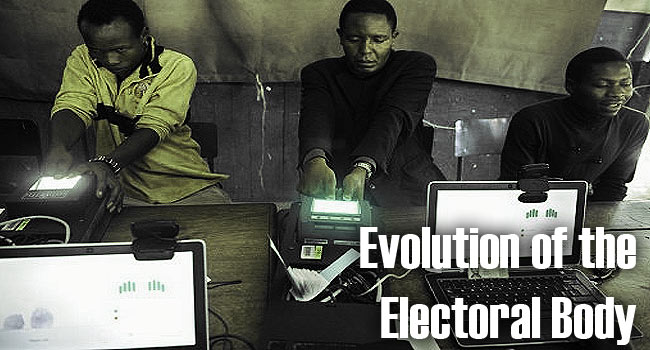
The Interim Independent Electoral Commission (IIEC) was formed to replace the Electoral Commission of Kenya and was charged with the mission to institutionalize sustainable electoral processes that would guarantee free and fair elections. The team had nine commissioners. The chairman and commissioners were nominated through a competitive process by Parliament appointed by the President in consultation with the Prime Minister and sworn in on May 11, 2009.
The body was mandated to:
Reform the electoral process management of elections and to institutionalize free and fair elections
Establish an efficient and effective secretariat
Promote free and fair election
Register voters afresh and create a new voters' register
Develop a modern system for collection, transmission and tallying of electoral data
Conduct a referendum for a new constitution
Facilitate the observation, monitoring evaluation of elections and referenda
Promote voter education and culture of democracy
Settle minor electoral disputes during an election as may be provided by law.
The IIEC had 12 months from December 24, 2009 to December 2010 to discharge its mandate. Alternatively, it would cease to exist three months after a new constitution was effected. In that case, the new constitution would provide for a permanent successor electoral body, which would take up the role of reforms.
The Commission successfully fulfilled its mandate — registered voters afresh and created a new register, conducted the referendum on the new Constitution and by-elections in Bomachoge, Shinyalu, South Mugirango, Matuga, Makadara, Starehe, Juja and Wajir South constituencies.
The commissioners serving in the IIEC were: Ahmed Issack Hassan (chairman), Simiyu Abuid Wasike, Winnie Guchu, Yusuf Nzibo, Hamara Ibrahim Adan, Ken Nyaundi, Tiyah Galgalo, Davis Chirchir and Douglas Mwashigadi
Under the dispensation of the new constitution, there is a provision for the establishment of the Independent Electoral and Boundaries Commission (IEBC) whose responsibilities include:
The continuous registration of citizens as voters.
The regular revision of the voters roll.
The delimitation of constituencies and wards.
The regulation of nomination of candidates by political parties.
The settlement of electoral disputes other than petitions.
The registration of candidates for election.
Voter education.
The facilitation of the observation, monitoring and evaluation of elections.
The regulation of the amount of money that may be spent by or on behalf of a candidate or party in any election.
The development of a code of conduct for candidates and parties contesting elections.
Monitoring compliance with the electoral laws.
Supervising referenda and elections to any elective body or office established by this Constitution.
Review the number, names and boundaries of constituencies at intervals of eight and twelve year
The boundaries for all the electoral areas are to be drawn by an Independent Electoral and Boundaries Commission (IEBC).
The short listing of candidates for commissioners to the Independent Electoral and Boundary Commission (IEBC) kicked off where the selection panel forwarded three names for the chairperson's job, and thirteen names for commissioners to President Mwai Kibaki and Prime Minister Raila Odinga.The names are to be presented to parliament for approval. The IEBC is said to be unveiled soon as it is expected to conduct its first election in November during the Kitutu Masaba by-election scheduled for the November 28.
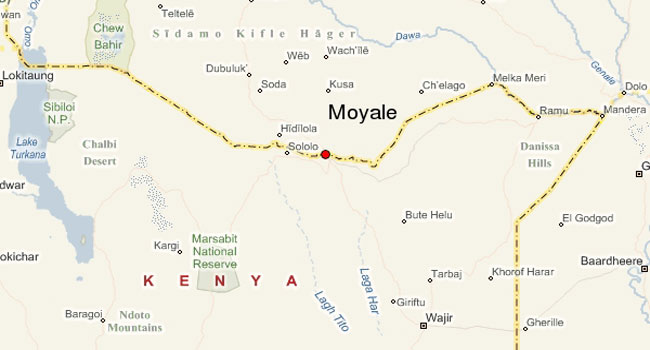
The Northern part of Kenya has been experiencing very tough situations in the recent past. As it is trying to recover from a very severe drought, clashes seem to unfortunately be turning out to be the order of the day. The places in this region that are affected are Moyale, Isiolo, Pokot and Turkana, which are all communities of pastoralists.
Speculations have been made to find the main cause of the conflicts which have so far left over 50 people dead, many hurt and thousands displaced. This is according to a report by the UNHCR, which has voiced its concern over the conflicts, stating that the clashes between the Borana and Gabra livestock herding communities in Moyale town are as a result of revenge attacks and violence.
The report states that some of the factors motivating the clashes between the communities may include competition for grazing land, water and cattle rustling in a bid to replace some of the cattle that died during the drought season.
However according to the National Cohesion and Integration Commission (NCIC), the ethnic violence being experienced in these parts of Northern Kenya is directly linked to the general election. NCIC Chairman Mzalendo Kibunjia has warned that unless communities in the region are integrated on time, Kenya may experience the worst violence in the region later this year.
Kibunjia explained that the NCIC has been to Isiolo and Moyale and has established that the ongoing violent conflicts are politically motivated in anticipation of the 2012 elections. He further advised that the conflicts must be treated as electoral related and not dismissed as conflict over water, pasture and cattle rustling.
The areas have been rendered inaccessible due to insecurity. The UN Office for the Coordination of Humanitarian Affairs (OCHA) has therefore called for greater provision of security and protection by Government authorities in these regions to ease access so as help displaced families.
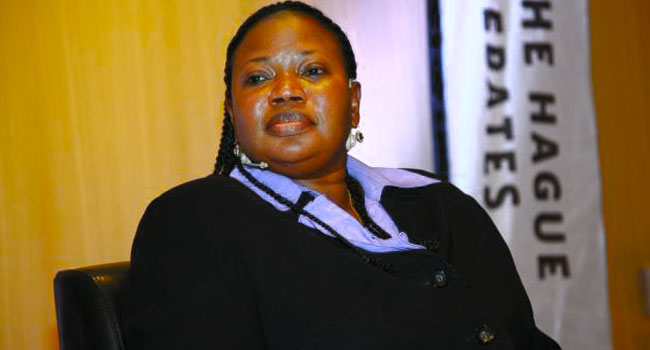
Fatou Bensouda, a Gambian lawyer aged 50, is to take over from Luis Moreno-Ocampo, as the International Criminal Court (ICC) Prosecutor from April 2012. The new prosecutor is not a new face at the ICC and has more than 20 years of experience in prosecution. She is to serve a one nine-year term handling cases touching on crimes against humanity committed in various countries in Africa. In addition, she heads the Prosecution Division of the Office of the Prosecutor at The Hague. She currently reigns as the International Criminal Court's deputy prosecutor, a position which she has served since her appointment in 2004. Being African, she hails from Gambia where she served as the country's Attorney General, which is the country's highest legal office. Bensouda will set a record as the first African and woman to hold the post.
She firmly dismissed as "unjustified" the notion –supported by leaders like Yoweri Museveni of Uganda and Robert Mugabe of Zimbabwe – that the ICC is anti-Africa. This, ICC critics believe, is an extension of the bias against Africa and the face of Neo-Colonialism. Bensouda disagrees. She has been unyielding in seeking justice for victims of crimes against humanity. She is familiar with the two cases against six Kenyans accused of crimes against humanity, following post-election violence of 2007-2008. The six are awaiting a ruling by the ICC Pre-trial Chamber II on whether the charges against them are strong enough to be tried at The Hague. That ruling is expected in the first quarter of next year. If charges against Eldoret North MP William Ruto, Tinderet MP Henry Kosgey, radio presenter Joshua arap Sang, Finance Minister and Deputy Prime Minister Uhuru Kenyatta, Head of Public Service Francis Muthaura and Postmaster General and former Police Commissioner Hussein Ali are confirmed, it is the new prosecutor who will continue with the cases from June 2012, when Ocampo leaves office.
Bensouda also handled the case on Kabuga's indictment. He was charged in absentia with conspiracy to commit genocide, alongside former Defence Minister Augustine Bizimana and Major Protais Mpiranya, former commandant of late President JuvÈnal Habyarimana's Guard. Other cases she is to continue with at the Office of The Prosecutor touch on atrocities committed in the Democratic Republic of Congo, Sudan, Uganda, Ivory Coast, and the Central African Republic.
Lawyers handling the Kenya cases at The Hague state that Bensouda deserves the post due to her experience in prosecuting international cases.
Luis Moreno-Ocampo will not see any Kenyan case to its conclusion should any of the Kenyan cases before the ICC go to trial. This change of prosecutors has evoked anxiety from Kenyans and curiosity as to what will be the fate of the six Kenyans.
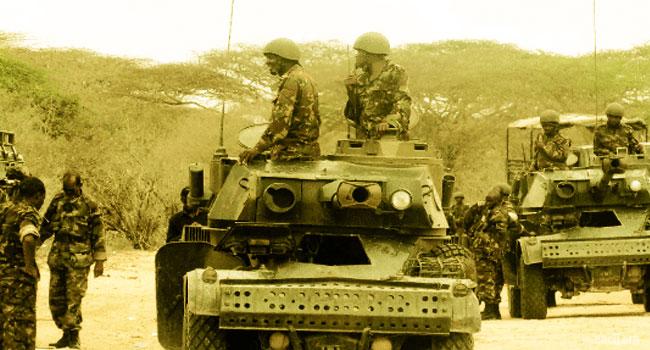
Since the inception of operation Linda Nchi in October 2011, various acts of combat have been employed by the combatants in a bid to assert their sovereignty and military power. Kenyan battalions were deployed to Somalia to battle the Al-Shabaab forces. A Kenyan military helicopter crashed at 7:55 pm 16th of October near Liboi's primary school, killing five Kenyan military personnel. The Kenyan forces were met with heavy rains in Somalia which slowed their progress. The following forces joined the Kenyan troops to back the operation after issuing a communiqué in support of Operation Linda Nchi:
African Union Mission in Somalia (AMISOM)
Intergovernmental Authority on Development (IGAD)
Somali National Army (SNA)
Transitional Federal Government (TFG)
The Kenyan Cabinet unanimously voted for Kenyan troops to secure and remain in Kismayo until the TFG or AMISOM assumes control of the port city. The TFG-aligned Ras Kamboni brigade and Kenyan troops captured the town of Ras Kamboni. Three hundred Ras Kamboni fighters entered the town, forcing al Shabaab to flee. Later, Kenyan security officials reported that al Shabaab militants ambushed Kenyan soldiers near Afmadow, killing two and injuring four others.
It was reported that French military spokesman Colonel Thierry Burkhard pledged limited French support for the Kenyan operation. France will assist in transporting supplies to Kenyan troops in northern Kenya. The U.S. Ambassador to Kenya, Scott Grattion, denied any U.S. military operations outside of the Kenyan border and noted that the U.S. will continue with overt technical support to the Kenyan military. TFG President Sheikh Sharif Sheikh Ahmed spoke in Mogadishu questioning Kenya's offensive against al Shabaab. On 27th October 2011 Anan estimated 45 al Shabaab militants ambushed Kenyan soldiers along the road between Taabta and Qoqani at 11:30am. Kenyan military spokesman Major Emmanuel Chirchir reported that nine al Shabaab fighters were killed and two Kenyan soldiers were injured. One of the soldiers later died of his injuries. Suspected al Shabaab militants also attacked a vehicle in Lafey in Mandera in Kenya, killing two Ministry of Education officials.
The Kenyan government extended amnesty to Kenyan members of al Shabaab, asking those who have been recruited to denounce the group and surrender to the authorities. The Kenya and Somalia jointly called for international assistance in the blockade of Kismayo.
On 1st November Al Shabaab militants ambushed a Kenyan convoy injuring three soldiers. Al Shabaab's military spokesman Sheikh Abdi Aziz Abu Mus'ab reported that al Shabaab militants had killed ten Kenyan soldiers. A subsequent al Shabaab statement claimed that its fighters ambushed a Kenyan convoy near the village of Qandis, about 35 km from Dhobley, and that three military vehicles hit by rocket-propelled grenades (RPGs). A Somali military spokesman reported that a counter-attack killed 36 al Shabaab militants. Ethiopian forces crossed into Somalia's Galgudud region and were reported to have entered the villages of Qeydar and Marodile in Guriel and Banbal districts before leaving.
The government of Eritrea denied media reports that it had flown weapons into Somalia destined for al Shabaab. The Eritrean foreign ministry said, "The government of Eritrea states categorically that these accusations are pure fabrications and outright lies as Eritrea has not sent any arms to Somalia. Tuesday's baseless accusations are the latest product of a misinformation campaign orchestrated to undermine Eritrea and frustrate its constructive regional and international engagement." Kenyan military spokesman Major Emmanuel Chirchir reported that a third planeload of weapons landed in Baidoa, the capital of Bay region. Kenyan military spokesman Major Emmanuel Chirchir reported that al Shabaab is using donkeys to transport weapons and supplies, noting that the price of donkeys has risen from $150 to $200. He warned residents not to sell donkeys to militants and said that large movements of donkeys would be considered part of al Shabaab's activity. On 5th November two grenades were thrown at a church in Garissa in Kenya, killing two people and injuring five others. It is unclear who was responsible for the attack; Kenyan authorities have blamed al Shabaab. Gunmen also attacked a vehicle carrying Kenyan Certificate of Primary Examination papers on the 7th in Damajale near Liboi leaving five dead. A high-level meeting between the presidents of Somalia, Kenya, and Uganda in Nairobi emphasized coordination between the military forces in Somalia to defeat al Shabaab. The three countries issued a joint communiqué that reaffirmed objectives outlined in previous communiqués. Kenya announced that it would be willing to deploy troops to AMISOM; however, it is unclear whether these troops would be in addition to Kenyan forces already inside Somalia. The Kenyan government appealed through the U.S. Department of State for intelligence and logistical assistance to support its troops in Somalia. Kenyan police arrested 60 suspected al Shabaab militants destined for Somalia. Kenyan Internal Security Permanent Secretary Francis Kimemia said that militants entered Kenya through Uganda. Kenyan Colonel Cyrus Oguna reported that eight Kenyan soldiers had died since the start of the operation and that one was missing.
Israel expressed its willingness to send consultants to Kenya to help Kenya secure its cities from terrorist threats. This gesture was to share Israel's experience with Kenya because the operation in Somalia is very similar to Israel's past operations first in Lebanon and in Gaza Strip. This was expressed through Israel's Ambassador to Kenya Gill Haskell.