"It is necessary that the whole of Society defend the Right to Life"
VATICAN CITY, FEB. 28, 2011 (Zenit.org).- Here is translation of the address Benedict XVI delivered Saturday upon receiving in audience those who participated in the 17th general assembly of the Pontifical Academy for Life.
Esteemed Cardinals, Venerable Brothers in the Episcopate and the Priesthood, Dear Brothers and Sisters,
I receive you with joy on the occasion of the annual assembly of the Pontifical Academy for Life. I greet, in particular, the president, Bishop Ignacio Carrasco de Paula, and I thank him for his courteous words. I address my cordial welcome to each one of you!
In the activities of these days you addressed topics of current importance, which question contemporary society profoundly and challenge it to find answers that are appropriate for the good of the human person.
Post-abortion syndrome -- the serious psychological difficulties often felt by women who have taken recourse to voluntary abortion -- reveals the irrepressible voice of the moral conscience, and the grave wound it suffers each time that human action betrays the person's innate vocation to good, and of which he gives witness.
It would be useful also in this reflection to focus attention on the conscience, at times blurred, of the fathers of the children, who often abandon pregnant women. The moral conscience -- teaches the Catechism of the Catholic Church -- "is a judgment of reason whereby the human person recognizes the moral quality of a concrete act that he is going to perform, is in the process of performing, or has already completed. In all he says and does, man is obliged to follow faithfully what he knows to be just and right" (No. 1778).
It is, in fact, the duty of the moral conscience to discern good from evil in the different situations of existence, in order that, on the basis of this judgment, the human being can orient himself towards the good. Many would like to deny the existence of the moral conscience in man, reducing its voice to the result of external conditioning or to a purely emotive phenomenon, and it is important to affirm that the moral quality of human action is not an extrinsic value or even optional and it is not even a prerogative of Christians or believers, but common to every human being. In the moral conscience, God speaks to each one and invites him to defend human life at all times. In this personal bond with the Creator lies the profound dignity of the moral conscience and the reason for its inviolability.
Fulfilled in the conscience of every man -- intelligence, emotive nature, will -- is his vocation to the good, so that the choice of good or evil in the concrete situations of existence ends by marking the human person profoundly in each expression of his being. The whole man, in fact, is wounded when his behavior is contrary to the dictate of his own conscience.
However, even when man rejects the true and the good that the Creator proposes to him, God does not abandon him, but through the voice of conscience, continues to seek and speak to him, so that he will acknowledge his error and open himself to Divine Mercy capable of healing any wound.
Doctors, in particular, cannot fail to consider important the grave duty to defend against the deception of the conscience of many women who think they will find in abortion the solution to family, economic, social difficulties or to the problems of health of their children. Especially in this last situation, the woman is convinced, often by the doctors themselves, that abortion represents not only a licit moral choice, but that in addition it is a necessary "therapeutic" act to avoid the suffering of the child and of its family and an "unjust" burden to society.
In a cultural background characterized by the eclipse of the meaning of life, in which the common perception of the moral gravity of abortion and of other forms of attempts against human life has been attenuated, exacted from doctors is a special fortitude to continue affirming that abortion does not resolve anything, but that it kills the child, destroys the woman and blinds the conscience of the child's father, often ruining family life.
This duty, however, does not only affect the medical profession or health professionals. It is necessary that the whole of society defend the right to life of the conceived and the true good of the woman, who never, under any circumstance, will be fulfilled in the choice of abortion. In the same way it is necessary -- as has been indicated in your works -- to provide the necessary help to women who sadly have already taken recourse to abortion, and who now experience all its moral and existential tragedy. There are many initiatives, at the diocesan level or through individual volunteer entities, which offer psychological and spiritual support for a complete human recovery. The solidarity of the Christian community cannot give up this type of co-responsibility.
I would like to recall, in this connection, the invitation addressed by the Venerable John Paul II to women who have taken recourse to abortion. "The Church is aware of the many factors which may have influenced your decision, and she does not doubt that in many cases it was a painful and even shattering decision. The wound in your heart may not yet have healed. Certainly what happened was and remains terribly wrong. But do not give in to discouragement and do not lose hope. Try rather to understand what happened and face it honestly. If you have not already done so, give yourselves over with humility and trust to repentance. The Father of mercies is ready to give you his forgiveness and his peace in the Sacrament of Reconciliation. To the same Father and his mercy you can with sure hope entrust your child. With the friendly and expert help and advice of other people, and as a result of your own painful experience, you can be among the most eloquent defenders of everyone's right to life" ("Evangelium Vitae," No. 99).
The moral conscience of researchers and of the whole of society is profoundly involved also in the second topic of your works: the use of umbilical cord banks for clinical and research purposes. Medical-scientific research is a value and, hence, a commitment, not only for researchers but for the whole civil community. The result is the duty to promote ethically valid research on the part of institutions, and the value of the solidarity of individuals in the participation of research directed to promote the common good.
This value, and the necessity of this solidarity, are very well evidenced in the case of the use of stem cells from the umbilical cord. They are important clinical applications and promising research at the scientific level, but for their realization many depend on the generosity, on the donation of blood of the cord at the moment of birth, on the part of the women who have just given birth. Hence, I invite all of you to be promoters of a true and conscious human and Christian solidarity. In this connection, many medical researchers rightly regard with perplexity the growing number of private storage banks of the blood of the cord for exclusive autologous use. Such an option -- as the works of your Assembly demonstrate -- in addition to lacking a real scientific superiority in relation to the donation of the cord, weakens the genuine spirit of solidarity which must constantly animate the search of that common good to which, in the last analysis, science and medical research tend.
Dear brothers and sisters, once again I express my gratitude to the president and to all the members of the Pontifical Academy for Life for the scientific and ethical courage with which you carry out your commitment to the service of the good of the human person. My hope is that you will maintain always alive the spirit of authentic service which makes hearts and minds sensitive to recognize the needs of the men who are our contemporaries. To each one of you and to your loved ones, I impart my heartfelt apostolic blessing.
NEW YORK, March 17 (C-FAM) Activists and lawyers shared advice on how to exploit chaotic political situations to advance abortion rights during a recent UN side event. Panelists boasted of their successes in influencing the new constitutions of both Kenya and Nepal to include provisions allowing for legalized abortion.
"Strategic moments can surface in chaos," said Melissa Upreti, a legal advisor of the Center for Reproductive Rights (CRR). She advised audience members at the UN Commission on the Status of Women event to seize those moments as opportunities to advance abortion and "reproductive rights."
Activists at the CRR have swayed abortion policies by filing test cases to push the envelope on abortion laws. As a result of these lawsuits, many governments have adopted policies to ensure that access to "reproductive rights" includes state-funded abortion and contraceptive services.
Speakers from the Kenyan Federation of Women Lawyers recounted how just last February they were afraid, progressive reproductive health provisions would not be included in the new Kenyan constitution, due to vocal opposition by religious groups. At an informal discussion, a Kenyan audience member said, "We would not have won if the Christian denominations hadn't splintered."
The Kenyan women lawyers attributed their success to peeling away opposition in other Christian denominations and isolating the Catholic Church as the only major group in opposition to a constitutional article that provides reproductive healthcare rights, and legal access to abortion.
At another panel, with the entire Kenyan delegation and Minister of Gender present, experts explained that the new Kenyan constitution provides for international law directly in the legal structure, which may also at times even override local law. The new constitution also provides that the new rights, which include reproductive healthcare, are progressive and that the state must continually adapt to meet the demands of such rights.
A representative of the Center for Reproductive Rights spoke on their success in influencing the interim constitution of the Nepalese government, which was adopted in 2007. Progressive legal experts are celebrating Nepal's constitution as a major victory for abortion rights because it intentionally excludes a right to life. She highlighted its similar features to South Africa and Kenya, including rights to healthcare, education, and rights against exploitation in the name of custom and tradition.
The important distinction in the Nepalese constitution is that instead of a right to life it guarantees a "right to freedom, and to live with dignity." A legal advisor explained that the right to life, included in other constitutions, has been interpreted in favor of the fetus regarding abortion cases. This has sometimes deterred abortion activists; however, Nepal's constitution is a huge step forward for abortion rights and sets a precedent in international law.
The movement to expand human rights to include economic, social, and cultural rights has found many critics. Experts say that instead of ensuring economic and social progress, expansive rights eventually deter healthy economic growth and promote a social ideology that is not commonly shared.
The Pro Life Movement is composed of all who assert and promote the sanctity of human life from conception to natural death
Proponents of abortion directly contradict and undermine the moral foundation of vision 2030.
They violate the UTU value (humanness). Disregard for the sanctity of Human life.
By misquoting and misrepresenting information that could be used for the general good of the nation, they fail on the test of integrity.
By their inability to inform the nation on the true state of abortion in Kenya, by publicly misleading the public and even government on the import of abortion, they fail on the account of patriotism.
Through the promotion of a skewed system of allocation of resources for healthcare away from more pressing health issues, they fail on account of stewardship
Life Before Birth
There is generic and medical evidence that points to life beginning before birth.
That is why governments invest huge amounts of money in ANC, PMTCT etc
It is also why science remains profitable - making equipment for monitoring babies!
It gives health professionals and non medics a vocation as obstetricians, midwives, neonatologists etc!
Personhood
Babies in the womb have fully human characteristics and they respond to stimuli while in the uterus.
For example:
21 days after fertilization, the baby has a heart that is beating and can be detected medically;
8 weeks, the baby feels pain;
9 weeks, the baby can grasp an object with the hands;
10 weeks the baby can swallow and frown and the toes and fingers are separated.;
12 weeks, the baby can suck, kick and play with the umbilical cord.
All organs are fully formed and functional by 12 weeks of life within the uterus
"A national assessment of the Magnitude and consequences of Unsafe abortion in Kenya, 2004" by the Ministry of Health, Kenya Medical Association, FIDA Kenya and Ipas.
"A national assessment of the Magnitude and consequences of Unsafe abortion in Kenya, 2004" by the Ministry of Health, Kenya Medical Association, FIDA Kenya and Ipas.
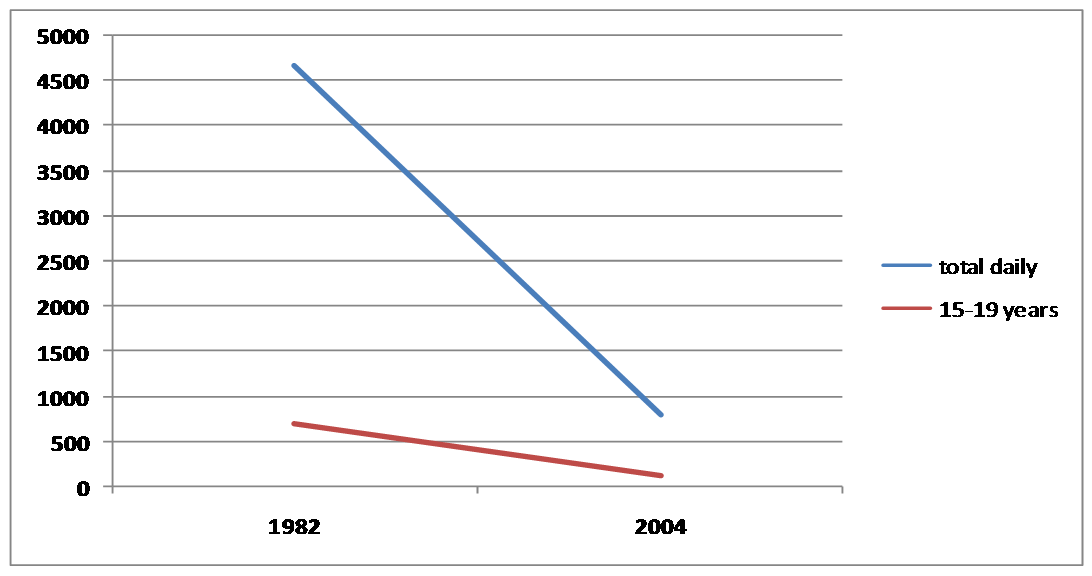
The difference in the two sets of data reflects an 83% drop in the number of abortions procured daily as at 2004. This rate of decline is world class and does not need any further interventions.
Countdown to 2015 for maternal, newborn and child survival; the 2008 report on tracking coverage in intervention. Lancet 2008; 371:1247-58
Does the Technique used in Abortion matter?
Abortion complication rates in Kenya are very high even in specialist hands and at tertiary institutions.
With liberalization of the procedure we will not be able to attain the Millennium Development Goal 5!
The use of tablets; mifepristone and or misoprostol for medical abortion will compound the situation . This because they will be taken in remote areas without access to healthcare. The result? More child and maternal deaths!
Current data shows that medical abortion results in a x 4 incidence of adverse events or complications.
Niinimaki et al, Complications after medical and surgical abortion Obstetrics and Gynaecology, VOL.114, No.4 October 2009.
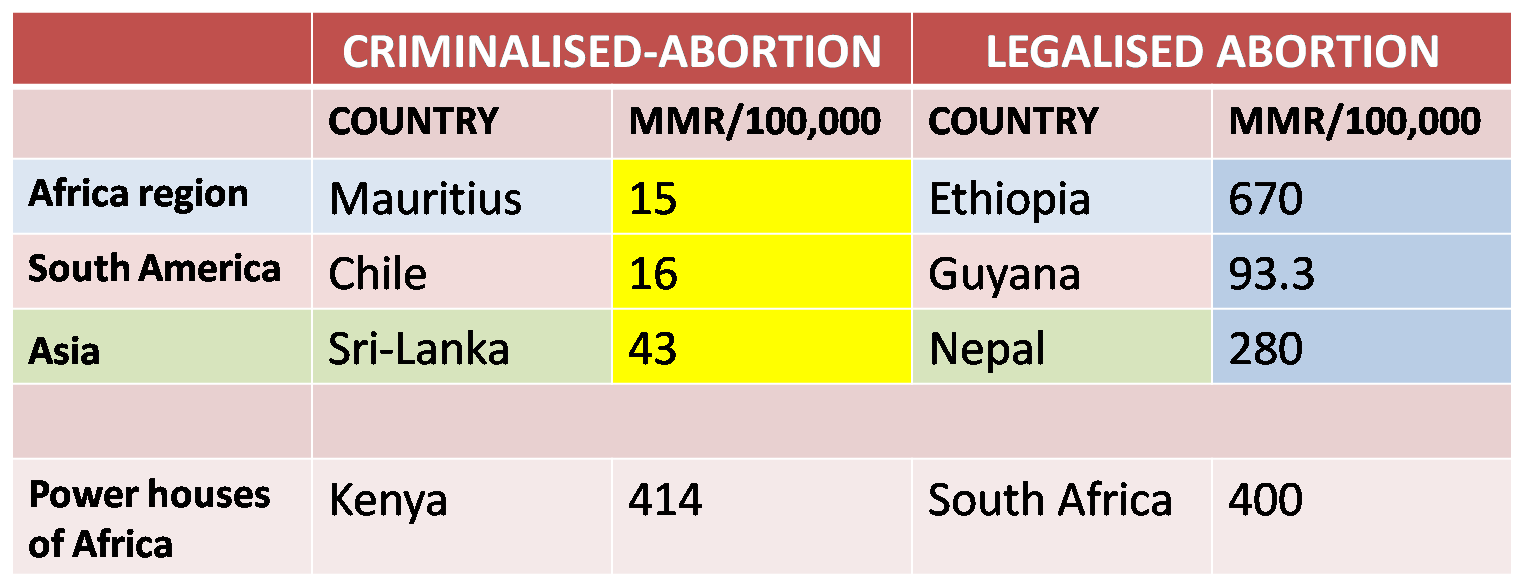
Comparisons of maternal mortality rates between countries that have criminalised and those that have legalised abortion
UNICEF website per country data 2000-2005/2007
Africa: Beyond Kenya
The African nation with the lowest maternal mortality rate is Mauritius(15), a country with some of the continent's most protective laws for the unborn.
On the other end of the spectrum is Ethiopia, which has decriminalized abortion in recent years in response to global abortion lobby pressure. Ethiopia's maternal death rate (670) is 45 times higher than in Mauritius.
South Africa has the continent's most liberal abortion laws and also a high maternal mortality rate of 400 per 100,000.
South America: Beyond Kenya
Chile, with constitutional protection for the unborn, outranks all other South American countries as the safest place for women to bear children.(MMR-15)
The South American country with the highest maternal mortality is Guyana, with a rate 6 times higher than in Chile at 93.3. Guyana allowed abortion without almost any restriction in 1995.
Ironically, one of two main justifications used for liberalizing Guyana's law was to enhance the "attainment of safe motherhood" by eliminating deaths and complications associated with unsafe abortion.
The Chile Experience
Abortion had always been a major cause of maternal death
The concern for maternal mortality rates, particularly the death of women from abortion, led to the implementation of public services oriented towards "responsible parenthood."
These services were established in Chile beginning in 1964.
Asia: Beyond Kenya
In Asia, Nepal, with no restriction on the procedure(abortion), has one of the world's highest maternal mortality rates (MMR 280).
The lowest in the region is Sri Lanka; with a rate fourteen times lower than that of Nepal (at MMR43).
According to the pro-abortion public interest law firm Center for Reproductive Rights, Sri Lanka has among the most restrictive abortion laws in the world.
Our Position
Legislation of Pro-abortion law contradicts and undermines the moral foundations for vision 2030.
Abortion denies the baby the most basic of its rights- the right to life, and equally denies the health worker the freedom of conscience.
The facts about abortion in the media are erroneous lacking in authenticity, and grossly inflated and misquoted.
Complications rates of abortion in Kenya even specialist hands and at tertiary healthcare level are unacceptably high.
The tablet for medical abortion has 4 times higher complication rate than surgical abortion.
The impact of the legalization of abortion on health service delivery and the economy will be too heavy for Kenya to bear.
We are very unlikely to attain the Millennium Development Goal 5 with the legislation of abortion in Kenya
There is no country in the world where abortion laws have improved maternal mortality.
Only two things work:
The implementation of public services oriented towards "responsible parenthood.
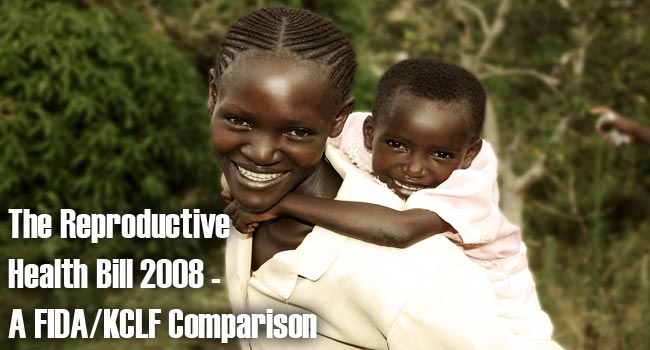
A bill now before Kenya's parliament would legalize abortion, making Kenya the first East African country to do so. The issue of abortion is highly emotional in Kenya. Women's groups argue that the Reproductive Health and Rights Bill will protect women from death and injury due to backstreet abortions, while critics say abortion violates African traditions and culture and is being pressed by Western interests.
According to Kenyan government figures, 300,000 backstreet abortions are performed in the country yearly, with 20,000 women being hospitalized due to abortion-related complications. It is numbers like these that propelled the Federation of Women Lawyers, or FIDA, to help draft the Reproductive Health and Rights Bill 2008, which seeks to legalize abortion.
The Kenyan Christian Lawyers (KCLF) wrote an alternative bill, one which protects both the woman and the child.
1. The Preamble
THE FIDA DRAFT It only recognizes the right of individuals of couples/individuals to freely decide the number spacing and timing of their families without recognizing the right of the unborn child. The unborn child's right to live is put subject to the rights of the couple to decide when to have children. Implication - Abortion is an acceptable way of deciding the number, spacing and timing of children.
THE KCLF DRAFT It provides for the access to quality and affordable family planning services for couples and individuals. This ensures that individuals and couples can freely decide the number, space and timing of their families through quality and affordable family planning services. Implication - Family planning services are the only way of deciding the number, spacing and timing of children.
2. Object and purpose of the Act Almost Similar Objects but the KCLF draft takes a more specific approach as opposed to FIDA's broad and often ambiguous definitions. The KCLF draft ensures that there are no doubts as to the scope of the Act. (see and compare both drafts)
3. Definition of adolescent THE FIDA DRAFT It lowers the age for adolescents thus exposing our children to contraceptives when they are still very young. This will increase sexual immorality when they are young. Implication - Our children as young as 10 years will be exposed to contraceptives and abortion related services. This could lead to immorality and sexual promiscuity at an early age.
THE KCLF DRAFT The draft raises the age of adolescent to 14 so that adolescents are not exposed to reproductive issues when they are still young. Implication - Our young children will not be exposed to contraceptives when they are still too young to be able to make informed and conscious decisions
4. Definition of Life THE FIDA DRAFT - N/A
THE KCLF DRAFT states that Herein life begins at conception. Implication - The unborn child has rights under this act the most important being a right to life.
5. Definition of Reproductive Rights THE FIDA DRAFT It includes the freedom to decide freely and responsibly the number, timing and spacing of children. Implication - This definition is broad enough to encompass abortion as a means of deciding when to have child.
THE KCLF DRAFT It limits the definition to only high quality and affordable reproductive care. This definition recognizes the need for Kenya to provide high quality reproductive health care and make it accessible to couples. Implication - It ensures that couples have freedom to prevent pregnancy using only quality and affordable family planning services.
6. Termination of pregnancy THE FIDA DRAFT This section provides for the basis of abortion. It provides the grounds for abortion (i.e. when a mother's mental health is at risk or when the pregnancy is as a result of rape, incest or defilement.) This will open the door for women to undertake abortion. It opens the door for a variety for untrained persons to undertake abortion. The definition of Health care service providers is too wide and leaves open for untrained persons to perform abortion. It makes it compulsory for a health care provider who refuses to perform an abortion (also referred to as 'a conscientious objection') to refer the pregnant mother to someone who does. This will force Christians (or those who oppose abortion on moral grounds) to aid in the killing of an unborn child. This violates their right to religion and their freedom of conscience. Implication - Women will be using this provision to undergo abortion. Abortion rates are likely to soar if this section is implemented.
THE KCLF DRAFT – N/A
7. Centres for Crisis Pregnancy Management THE FIDA DRAFT Does not provide for Centres of Crisis Pregnancy Management. Instead, it provides a situation where a health care provider merely advises a pregnant child to obtain parental consent to undergo an abortion. It is not compulsory that the child should obtain parental consent. Implication - Pregnant children can perform abortions without their parents ever knowing about it or consenting to it. This will undermine parental responsibility and cause division within the family.
THE KCLF DRAFT Establishes centres for the management of crisis pregnancy whose main aim would be to provide a safe haven for women who feel pressured to undergo an abortion because of heavy social stigma and financial constraints. Women undergo abortion because of the heavy social stigma and financial constraints associated with the pregnancy. These centres can be a place where they can deliver their babies away from social pressures Implication - Instead of undergoing an abortion because of heavy social stigma and financial constraints, pregnant women can run to these centres where they can get help and counselling in order to help them deliver the baby.
8. Baby Safety Deposit Cribs THE FIDA DRAFT – N/A
THE KCLF DRAFT The government shall establish BSDC where women who cannot take care of their children (below the age of 6 months) can deposit them in a crib set aside in every government hospital. Rules and regulations are set out to govern the way these centres would work. Implication - Decrease in the number of illegal abortions because mothers have the option of giving away their children if they cannot take care of them. It will reduce the unsafe and often dangerous practice of mothers leaving their children in rubbish bins or other unhealthy places for fear of prosecution.
9. Confidentiality THE FIDA DRAFT Considering the whole Act this section is likely to be used to the detriment of the family setup. Implication - A pregnant wife can undergo an abortion without her spouse ever knowing or ever consenting to it. If the aggrieved spouse should learn about it, it would cause tension in the family (perhaps even a divorce). Pregnant girls will perform abortions without their parents ever knowing about it because such information is protected by this confidentiality section.
THE KCLF DRAFT – N/A
10. Female Genital Mutilation THE FIDA DRAFT These sections are not comprehensive and cannot be used as an effective way of tackling FGM. Implication - These sections will not help tackle the problem of FGM
THE KCLF DRAFT It provides a comprehensive way of tackling FGM. In dealing with FGM, the government must Take measures to reach out to communities that practice FGM. In conjunction with other groups must seek to provide alternative rites of passage as a way of bridging the gap between culture and safe modern practice. Implication - To tackle FGM, it is not enough to jail those who have committed the offense because it is cultural issue. One must provide an alternative rite of passage otherwise the practice will continue albeit the law against it.
FROM THE CHRISTIAN MEDICAL FELLOWSHIP AND THE KENYA CHRISTIAN LAWYERS FELLOWSHIP
Introduction
There has been a heated debate about; when life begins, the legalization of abortion and the Justification for such legislation. As Medical and Legal PROFESSIONALS and EXPERTS in the fields of Medicine and Law, we wish to make it very clear that:
The views that have flooded the media lately WERE NOT, ARE NOT AND WILL NEVER BE THE VIEWS OF EITHER The Kenya Medical Association (KMA) OR The Kenya Obstetrics and Gynaecological Society (KOGS).
These views were generated, promoted and paid for by the PARTICULAR INDIVIDUALS AND THEIR SPONSORS.
Medical doctors know the scientific facts about the beginning, the development of human life through its various stages and will NEVER contradict these facts that have been documented in scientifically written medical textbooks.
Medical doctors know and understand that life starts CONCEPTION. Conception is the most critical stage for human existence, without it, life never exists.
Medical doctors affirm what millions of mothers believe that the unborn babies in their wombs are ALIVE.
We therefore present several facts to you to clarify information you have heard, seen or read; and for you to consider as you deliberate on the proposed constitution.
FACTS ABOUT KENYA AND ABORTION
Kenya's vision 2030 has a MORAL FOUNDATION articulated in 5 values that include, God-fearing, UTU, integrity, stewardship and patriotism. Legalization of abortion UNDERMINES and CONTRADICTS all these values.
Life starts when a SPERM from the man and an EGG from the woman join (fertilization). At this point, a NEW INDIVIDUAL is formed and all his or her characteristics are determined including; sex, height, colour, intelligence among others. The fertilized egg (zygote) starts to divide in a very organized manner because it is ALIVE and eventually develops into a FULL HUMAN BEING.
To show that this baby is alive and FULLY human, his /her HEART can be seen BEATING 21 DAYS after fertilization, the baby FEELS PAIN at 8 weeks, the baby GRASPS OBJECTS in the hand at 9 weeks, the baby SWALLOWS at 10 weeks and SUCKS, KICKS and PLAYS with umbilical cord at 12 weeks. THE MOTHER CANNOT FEEL the MOVEMENTS of the LIVING baby just yet because he or she is still too small. The mother will eventually feel these movements 6-8 weeks later (4 to 5 months of pregnancy).
Abortion is a problem in Kenya. Hospital figures estimate 300,000 abortions per year. This figure, often quoted in the media and used by pro-abortionists to call for legalization of abortion, includes both miscarriages (spontaneous abortions in medical terminology) and induced abortions.
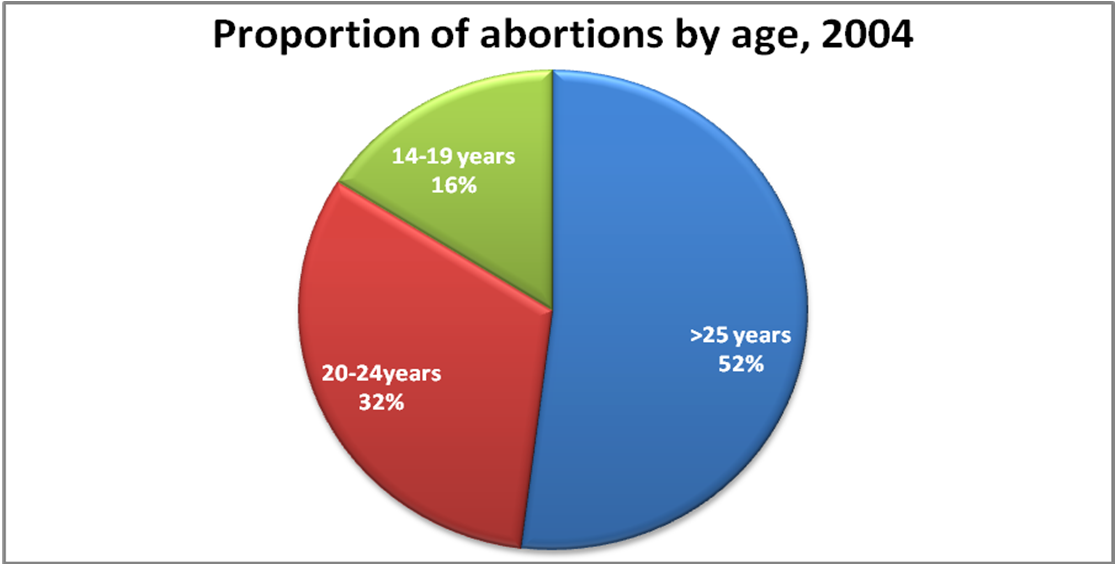
Of these only 16% (48,000) occur in girls between 15-19 years old, 32% (96,000) in women between 20-24 years while 52% (156,000) are in mature women over 25 years old.
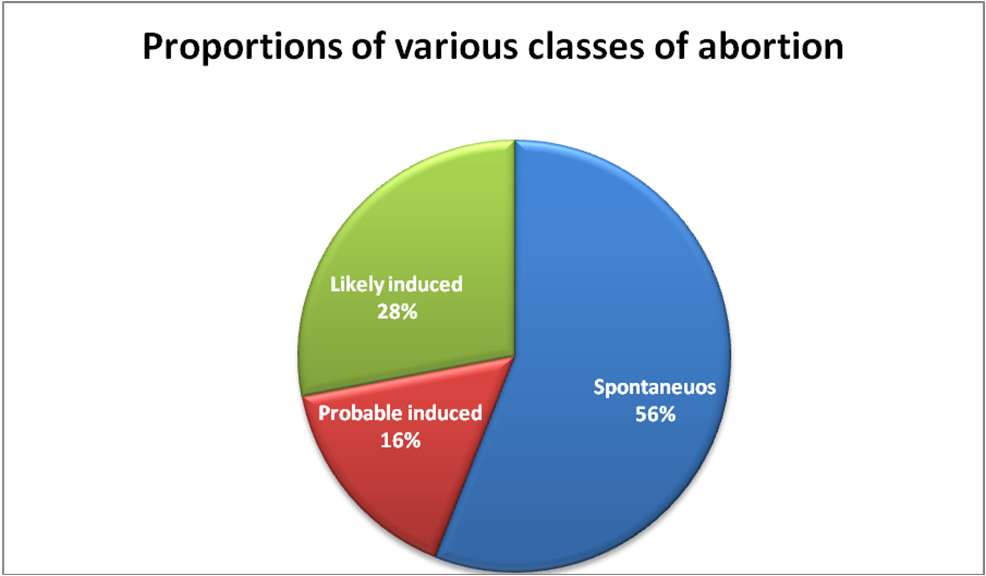
Out of this often-quoted figure of 300,000, 28% (84,000) are most likely induced while 56% (168,000) are miscarriages. It is not clear whether the remaining 16% are miscarriages or induced abortions.
Abortions are decreasing in Kenya EVEN without LEGALISATION. In 1982 there were estimated 4,666 abortions daily while in 2004 there were 800 abortions daily.That is an 83.3% REDUCTION in abortions over the last 22 years.
In the study done in 2004 and quoted above, six of the 7 women who died were looked after by SKILLED HEALTH CARE PROVIDERS who used WRONG INSTRUMENTS at the WRONG STAGE OF PREGNANCY. These were not backstreet abortions.
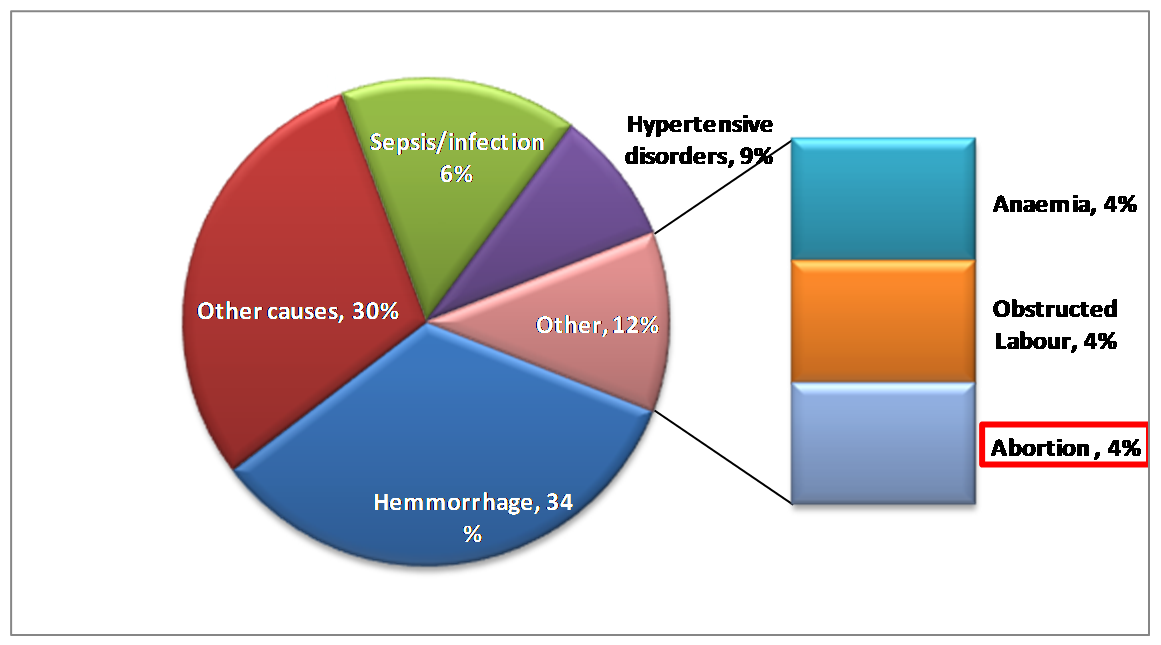
Although no woman should die from pregnancy, abortion contributes to and accounts for a VERY SMALL PROPORTION (4%) of pregnancy related deaths among women. 96% of pregnancy related deaths among women result from PREVENTABLE causes such as bleeding after childbirth (34%), high blood pressure (9%), infection (6%), obstructed labour (7%), anaemia (4%), and other causes (5%).
Women who undergo MEDICAL ABORTION (by using tablets like misoprostol) have 4 TIMES THE RISK OF SEVERE BLEEDING compared to those who are operated on.
There is NO COUNTRY in the world where LEGALISING abortion has reduced pregnancy related deaths among women. Examples of countries where abortion is ILLEGAL yet have LOW RATES of pregnancy related deaths include, Mauritius (15/ 100,000), Chile (16/100,000) and Sri Lanka (43/100,000). Countries that have LEGALISED abortion and have HIGH RATES of death include Ethiopia (670/100,000), Guyana (93.3/100,000), Nepal (280/100,000) and South Africa (400/100,000).
The reduction of pregnancy related deaths has been showed to be ALMOST ALWAYS influenced by:
Improving the socio-economic status of women,
Improving the quality of health care services,
Increasing access to skilled birth attendance,
Increasing child spacing and
Reducing teenage pregnancy.
These interventions are affordable. They can be implemented with available health workers and resources. Additional funding for these services will not distort the national budget all and in the immediate and long term will save us lives and money.
DEAR FOLLOWER OF CHRIST, PLEASE REMEMBER:
ABORTION KILLS INNOCENT BABIES,
ABORTION INJURES AND SOMETIMES KILLS the mothers
ABORTION WIPES OUT GENERATIONS.
There is NO SCIENTIFIC evidence that life starts after birth. IT IS A LIE!
AS YOU VOTE:
VOTE FOR A CONSTITUTION THAT DEFINES LIFE AS FOLLOWS;
'LIFE STARTS AT CONCEPTION AND ENDS AT NATURAL DEATH'
In the Bible, in the book of Jeremiah 1:5, God says, "Before I FORMED YOU IN YOUR MOTHERS WOMB I KNEW YOU"
FINALLY
WE ARE CONFIDENT THAT THE UNBORN BABIES OF KENYA CAN COUNT ON YOU CHURCHES AND BELIEVERS LEARN AND RECEIVE TRUE, SCRIPTURAL and SCIENTIFIC INFORMATION ABOUT CONCEPTION, LIFE AND ABORTION. WE ARE EQUALLY CONFIDENT THAT AS YOU VOTE ON THE CONSTITUTION, YOU WILL GIVE THE UNBORN BABIES THEIR GOD-GIVEN RIGHT TO LIFE AND THE OPPORTUNITY TO LIVE IN KENYA.